
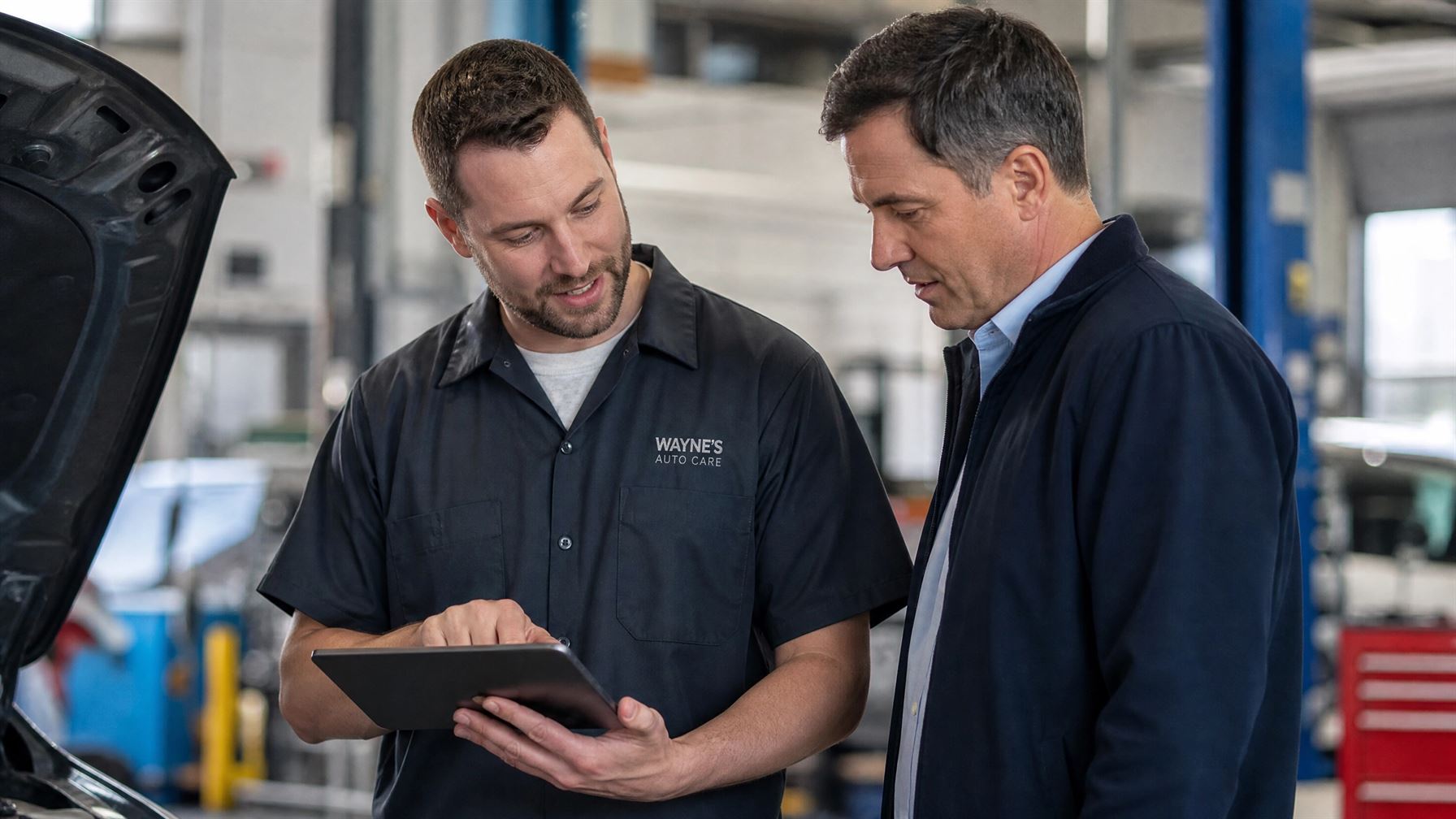
Finding a mechanic you trust is one of those things nobody thinks about until the check engine light is already on. Then you are standing in a parking lot, scrolling reviews, trying to guess which shop will fix the actual problem and which one will fix three problems you did not have while also considering their recommended maintenance schedule.
Here is a shortcut. We have been an auto repair shop serving the Cleveland east side for over 15 years, and we can tell you exactly which questions make a good shop comfortable and a bad shop squirm. Ask these ten before you hand over your keys. We have also included what a good answer sounds like, so you know one when you hear it.
1. Are your technicians certified, and in what?
ASE certification is the baseline. A good shop answers this in one breath and can tell you which specific certifications their techs hold, like engine performance, brakes, or electrical systems. For German or other European cars, ask whether anyone has brand-specific training or factory-level scan tools. “We work on everything” is not the same as “we know your car.”
2. Will I get a written estimate before any work starts?
In Ohio, consumer protection rules require repair shops to offer you an estimate before doing work that costs more than $50. A trustworthy shop does not treat this as a legal formality; they treat it as the normal way of doing business, encouraging you to ask the right questions. If a shop is vague about putting numbers in writing, leave.
3. Do you call before doing anything beyond the estimate?
This is the question that separates honest shops from expensive ones. The right answer is simple: nothing extra gets done without your approval, ever. Cars do surprise mechanics sometimes. A corroded bolt snaps, or a second problem hides behind the first. The difference is whether you find out by phone call or by invoice and making the right decision about necessary repairs.
4. What is your labor rate?
Any shop that hesitates here is hiding something. In the Cleveland area, independent shops generally run $110 to $150 per hour, while dealerships run $170 to $220, especially when it comes to maintenance on a used car. The number itself matters less than the willingness to say it out loud. While you are at it, ask how they calculate hours. Most honest shops use standard industry book times, so a job billed at 2.5 hours is 2.5 hours whether it took the tech two or three.
5. What parts do you use, and can I choose?
There are three tiers: new parts from the manufacturer, OEM (original-equipment) parts from the company that actually makes them for the manufacturer (brands like Bosch, Denso, and ZF), and budget aftermarket. A good shop explains the difference and lets you pick based on how long you plan to keep the car. A shop that cannot tell you whose brake pads are going on your car has not earned your business.
6. Do you warranty your work?
Twelve months or 12,000 miles is the common floor among reputable independents, and many go longer. Get the warranty terms in writing on the invoice. The follow-up question matters just as much: what happens if the repair fails on a road trip or if you encounter unexpected repairs? Shops in national networks can cover you at partner shops out of state.
7. Can I see the old part?
Five words, enormous filter. Honest shops save your old parts and will happily show you the torn CV boot or the scored rotor. Some will text you photos from under the car before you even approve the job. If a shop acts insulted by this question, that reaction is your answer.
8. How do you charge for diagnosis?
Warning lights and strange noises need testing before parts, and testing takes real time and equipment, so a diagnostic fee is fair. What you want to hear is what the fee covers and whether it applies toward the repair if you go ahead. What you do not want to hear is “free diagnosis,” because that cost hides somewhere, usually inside a padded parts bill. Proper vehicle diagnostic testing in Cleveland should end with the shop explaining what the codes mean in plain English, not just reading them to you.
9. Do you specialize in my car’s brand?
A shop can be excellent with domestic trucks and mediocre with a BMW, or the reverse. Ask what they see most, including how often they perform an oil change. The follow-up: do they have the software subscriptions for your brand? Modern German cars especially need electronic resets and coding after routine jobs like battery replacement. A shop without the right tools can install a part correctly and still leave the car unhappy.
10. Can you show me reviews from customers with my kind of car?
Star ratings are easy to skim and easy to game. Read the actual text instead. Look for reviews that mention your car’s brand, repeat visits over years, and specifics like being shown the collision problem or being talked out of an unnecessary repair. A shop with customers who have returned for a decade is telling you something no ad can.
What to do with the answers
No shop is perfect on all ten, and a defensive answer on one question is not automatically a dealbreaker. Patterns are what matter. A shop that is transparent about pricing, puts things in writing, calls before extra work, and shows you the parts is a shop you can build a long relationship with. And that relationship is where the real savings live, because a mechanic who knows your car’s history can tell you what needs fixing now and what can safely wait until spring.
Print this list, or just save it on your phone. Then go ask. The good shops will not mind at all. Honestly, we enjoy these questions, because they are the fastest way to show a new customer the difference.
